|
Home
|
Feb 2, 2026
This week’s themeWords formed in error This week’s words trialogue marquee roister serried runagate 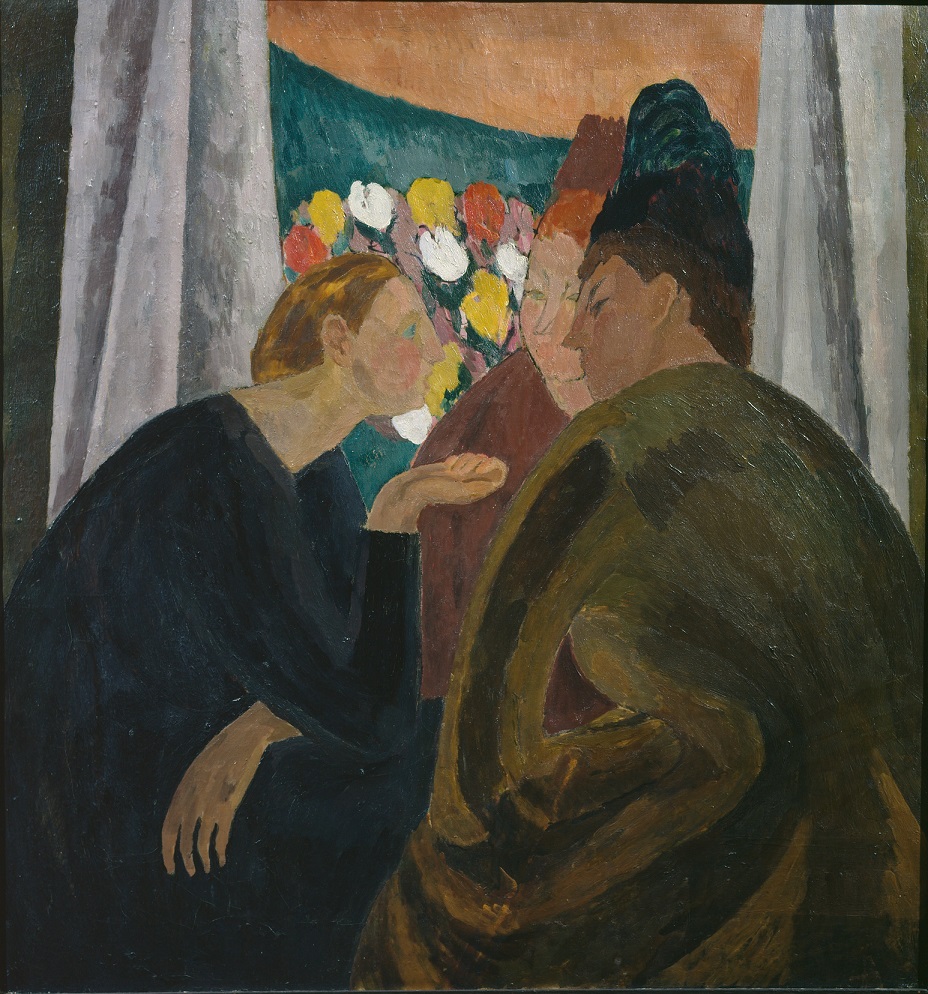
A Conversation, 1913-16
Art: Vanessa Bell Previous week’s theme There’s a word for it 


A.Word.A.Day
with Anu GargA reader wrote:
I was sorry to see that you’ve succumbed to the use of “hopefully”
rather than “I hope”. I guess the train has left the station on that one.
Yes, it has. It left a long time ago. About a century, in fact. Trains leave all the time in language and it’s best not to miss them or risk sounding like Dr. Whom. Consider a nun in church who has hope in her soul. Here are two usages:
But back to the train. We’re all aboard it, even when we don’t realize it’s moving. If we insisted on speaking “original” English, we’d be speaking Old English which, despite its name is indecipherable to modern ears. You’d need subtitles. This week we’ll feature five words that were coined in “error”. I put error in quotes because language is a glorious mishmash of mishearings, misinterpretations, false assumptions, and bad math. If you want purity, better to look into a nun’s soul, not peer into a language. trialogue
PRONUNCIATION:
(TRY-uh-log)

MEANING:
noun: A discussion in which three parties participate.
ETYMOLOGY:
Formed in English on the model of dialogue. Earliest documented use: 1532.
NOTES:
The word dialogue comes from Greek dia- (across) + -logue (discourse).
The prefix has nothing to do with numbers. English speakers mistook dia-
for di- (two) and concluded that a dialog involves two participants, so
let’s do trialogue with three.
USAGE:
“I believe that the subtext of this trialogue between the Israelites,
Moses, and God is that Moses is now being confronted by a new generation.” Shlomo Riskin; A Rebbe and Not a Rav; Jerusalem Post (Israel); Jun 10, 2011. A THOUGHT FOR TODAY:
Jobs are like going to church: it's nice once or twice a year to sing along
and eat something and all that, but unless you really believe there's
something holy going on, it gets to be a drag going in every single week.
-Thomas Michael Disch, science fiction author and poet (2 Feb 1940-2008)
|
|
Subscriber Services
Awards | Stats | Links | Privacy Policy
Contribute | Advertise
Awards | Stats | Links | Privacy Policy
Contribute | Advertise
© 1994-2026 Wordsmith