|
Home
|
Oct 28, 2026
This week’s themeEponyms from antiquity This week’s words Herodian Herodotean 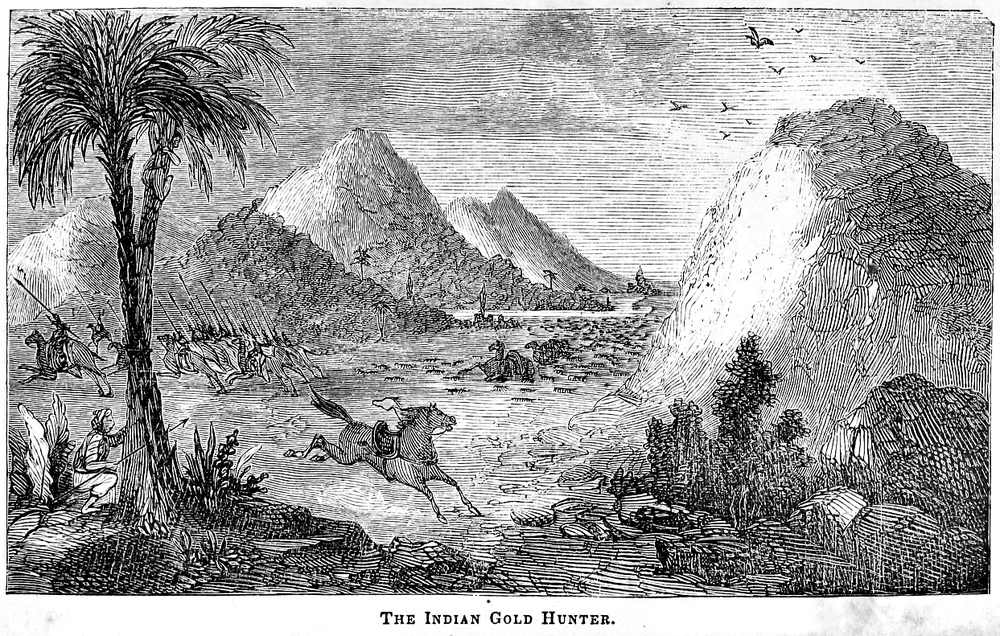
Gold hunters fleeing the giant ants described by Herodotus
Illustration
from Jacob Abbott’s History of Darius the Great, 1854 Wordsmith Games
A.Word.A.Day
with Anu GargHerodotean
PRONUNCIATION:
(hih-rahd-uh-TEE-uhn)

MEANING:
adjective: 1. (Of an account or narrative) Very large in scope or extremely detailed. 2. Fanciful or overly dramatic. ETYMOLOGY:
After Herodotus (c. 484-425 BCE), Greek historian. Earliest documented use:
1748.
NOTES:
Cicero called Herodotus the “Father of History”, though he also
noted the many fables in his work. Others have dubbed him the “Father of
Lies”. His Histories includes accounts of gold-digging ants larger than
foxes in India, winged serpents in Arabia, and rivers drunk dry by Xerxes’
army. To his credit, Herodotus distinguished reporting a story from believing it. The ancient Greek equivalent of “I’m just sharing the link; don’t blame me.” He recorded rumors; some modern leaders prefer to manufacture them. USAGE:
“The level of detail is stunning; Mr. Spiró ... revels in Herodotean
digressions.” Sam Sacks; Zelig in Jerusalem; The Wall Street Journal (New York); Nov 25, 2015. “It is a very Herodotean account -- in some cases you don’t know if he’s telling the truth or he has invented a tall tale.” Eight Sri Lankan Books We Love; Meandering Minimalists; Oct 18, 2024. A THOUGHT FOR TODAY:
It is a curious thing that every creed promises a paradise which will be
absolutely uninhabitable for anyone of civilized taste. -Evelyn Waugh,
novelist (28 Oct 1903-1966)
|
|
Subscriber Services
Awards | Stats | Links | Privacy Policy
Contribute | Advertise
Awards | Stats | Links | Privacy Policy
Contribute | Advertise
© 1994-2026 Wordsmith